
After the Shaking: Is My Iloilo Condo Safe in a Major Earthquake?
Open to See Summary
- Philippine law makes it illegal for buildings to be weak — all condos must follow the National Structural Code (NSCP).
- Modern condos are earthquake-resistant (not earthquake-proof) — built to survive Intensity VIII shaking from a Magnitude 7–8+ quake.
- The recent Visayas quake only reached Intensity IV in Iloilo — far below what code-compliant condos are designed to handle.
- Newer, properly priced projects usually mean better materials and stronger construction.
- Bottom line: If it’s built to code, your condo should keep you safe — even when the ground moves.
The recent strong earthquake in the Visayas region has led many Ilonggos—especially condo owners and prospective buyers—to ask serious questions about building safety.
As someone in the industry, I’ve been hearing the same urgent questions from friends and clients:
“Is my mid-to-high-rise home a deathtrap?” and “Am I safe in my condo?” I knew I had to dig in.
I spoke with my trusted engineer contacts (kumpares), including those working with major Iloilo developers, and dug deep into the national building codes to provide a clear, non-technical answer.
The short answer, based on their expertise and my research, is mostly “No, your home is not a deathtrap, and yes, you are safe in your condo.” But let’s break it down simply—no engineering degree required.
Reinforced by the Law: It’s Illegal for Buildings to Be Weak
First off, let’s ease those worries: Philippine law doesn’t mess around when it comes to quakes. Both the National Building Code of the Philippines (NBCP) and the National Structural Code of the Philippines (NSCP) mandate that all new buildings, including our beloved condos, must be designed to handle serious shaking without turning into rubble.
I asked my engineer friends, and they all vigorously expressed: “Sundon gid na ya ang building kag structural code, indi pwede nga indi!” and “It’s not optional. Violate it, and you’re looking at fines, shutdowns, or worse.”
The goal: Safeguard lives by preventing the total collapse of the structure during a major earthquake.
Buildings aren’t “earthquake-proof” (nothing is, really), but they’re earthquake-resistant. Expect some damage—like cracked walls or busted fixtures—to act as a deliberate “sacrifice,” absorbing the energy so the core skeleton stays intact. As one of my kumpares put it: “A damaged building is far better than a collapsed one. Importante Buhi!”
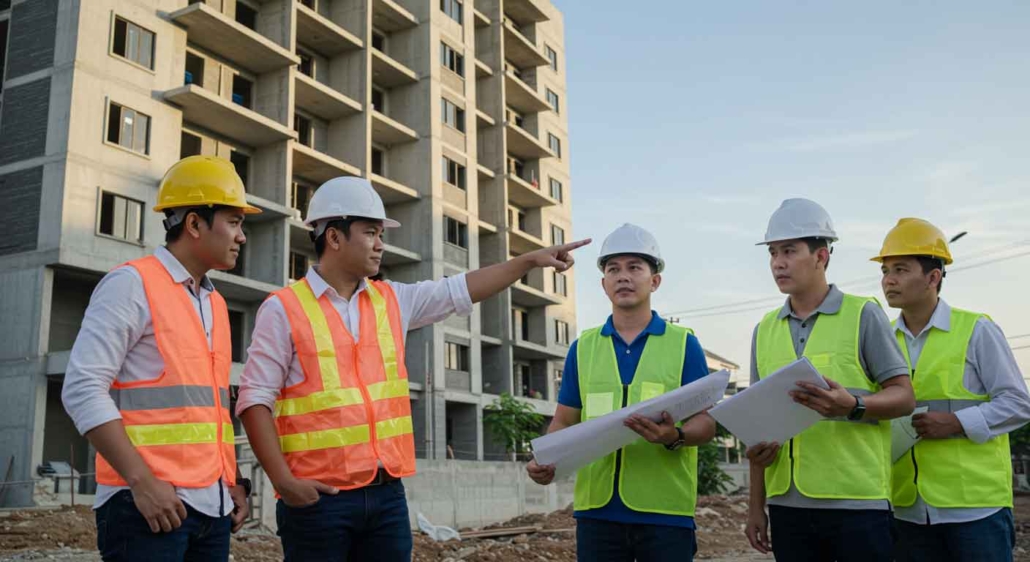
How Resistant Must Your Iloilo Condo Be?
It’s true that engineers deal with complex variables like seismic zoning, soil types, and proximity to fault lines. If we were to get technical, we would dive into terms like Peak Ground Acceleration and Force Reduction Factors.
Let me save you the headache of trying to understand that jargon and get straight to the simple answer:
The general rule of thumb, confirmed by my discussions and research, is that a code-adhering condo building should be able to withstand shaking of at least PEIS Intensity VIII (Very Destructive). This is the level of shaking that could likely be caused by a massive Magnitude 7 to 8+ earthquake near your location.
Yes, I also got confused at first—’magnitude’ and ‘intensity’ are two different scales, though they are often used interchangeably when discussing earthquakes.
The recent Cebu shaker? It was a Magnitude 6.9 overall, but it caused a localized Intensity VII (Destructive) in Bogo City. Crucially, here in Iloilo, it dialed down to Intensity IV (Moderately Strong).
So, Are We Safe Living in a mid-to-high-rise Condominium?
Absolutely, if it’s built to code. The engineers crunched it: An Intensity VIII design means your Iloilo condo could shrug off that Bogo-level VII like a minor hiccup. The recent IV here? “Peanuts,” one said with a smug certainty. No deaths or major injuries from collapses in code-compliant spots—lives saved, just as the law intends.

A Word of Caution: Price Tags and Peace of Mind
That said, not all condos are created equal. If yours was built post-2015 (when the code got even stricter), you’re golden. But here’s the tea: Some shady developers may cut corners — cheaper materials, rushed construction, or ignored engineering standards — which puts lives at risk. It’s illegal, but sadly it happens.
While I’m not saying this happens often, it’s a fair rule of thumb that:
- If a condominium project is priced significantly higher, it’s usually because it uses better materials, more steel, and stronger designs — it should be safer.
- If a project is unusually cheap for its size or scale, that could be a red flag. Somewhere, something may have been compromised — and it could be safety.
Always choose reputable developers who value their reputation and, more importantly, your life.

